

Marketing has never been a one-size-fits-all game. One of the most common questions across boardrooms and marketing meetings is whether to invest in digital marketing or traditional marketing. The answer depends on what the brand needs the channel to do.
Understanding the marketing landscape today
Audience attention is now split between mobile screens, public environments, live experiences, and physical spaces. Digital platforms dominate everyday interactions, but traditional formats still shape trust, local recall, and legitimacy. The strongest brands understand that these channels are not enemies. They are tools with different jobs.
What is digital marketing?
Digital marketing includes all marketing activity carried out through digital channels where performance can be tracked, analysed, and optimised.
- Search engine optimisation (SEO)
- Social media marketing
- Google Ads and paid media
- Content marketing such as blogs, videos, and reels
- Email marketing
- Influencer marketing
Digital campaigns can be targeted by location, age, interests, behaviour, and search intent. A real estate brand in Chennai, for example, can target users searching for premium apartments in Chennai or luxury homes in OMR. That precision is one of digital's biggest strengths.
What is traditional marketing?
Traditional marketing refers to offline marketing formats that built brands long before digital became mainstream.
- Print advertising in newspapers and magazines
- Hoardings and outdoor media
- Television and radio
- Flyers, brochures, and posters
- On-ground activations and events
Traditional channels are especially effective when a brand needs geographic visibility, physical presence, and top-of-mind awareness.
Digital marketing vs traditional marketing: key differences
| Factor | Digital Marketing | Traditional Marketing |
|---|---|---|
| Reach | Local to global | Mostly local or regional |
| Cost | Flexible and scalable | Higher fixed costs |
| Targeting | Highly precise | Broad and general |
| Measurability | Real-time analytics | Difficult to measure |
| Flexibility | Easy to modify while live | Hard to change once released |
| Engagement | Two-way interaction | Mostly one-way communication |
| Speed | Instant execution | Slower rollout |
Print advertising: does it still work?
Yes, especially in specific industries and for specific demographics.
- It builds credibility and trust.
- It can deliver strong visibility among local audiences.
- It works well for launches and announcements.
Its limitations are equally clear: targeting is limited, ROI is difficult to track, and exposure is often one-time unless repetition is bought in.
For real estate developers in Chennai, full-page newspaper ads in publications like The Hindu or Times of India still signal legitimacy, especially among older buyers who may not engage heavily on digital platforms.
Hoardings & outdoor advertising: visibility vs performance
Hoardings remain one of the most recognisable forms of traditional media, especially in metro cities.
- They deliver high visibility and strong physical presence.
- They create repeated exposure and top-of-mind awareness.
- They are expensive and hard to optimise once live.
- They offer almost no precise targeting beyond geography and traffic flow.
| Aspect | Hoardings | Digital Ads |
|---|---|---|
| Visibility | High physical presence | Screen-based exposure |
| Cost | High | Flexible |
| Targeting | Everyone passing by | Highly specific |
| Tracking | Limited | Detailed analytics |
| Optimisation | Not possible once live | Continuous |
In Chennai, locations like OMR, Anna Salai, and Mount Road remain valuable for awareness. But most brands now pair hoardings with digital campaigns to capture leads and measure downstream conversion.
Brand activations & experiential marketing
Activations focus on creating memorable experiences instead of just impressions.
- Mall activations
- Pop-up events
- Product demos
- Live experiences
These formats matter because they build emotional connection, encourage word-of-mouth, and generate digital amplification content.
A lifestyle brand launching in a Chennai mall, for instance, can use live demos, influencer visits, and interactive booths offline, then extend the experience through reels, stories, and paid ads online.
Advantages and limitations of digital marketing
Digital marketing has become essential because it offers cost-effective scalability, precise audience targeting, data-driven decision-making, continuous optimisation, and clearer ROI measurement.
That said, it is not perfect. The space is highly competitive, audiences face ad fatigue, consistent content is required, and platforms are always subject to algorithm shifts. Relying only on digital can sometimes reduce brand depth and perceived legitimacy.
Traditional marketing: strengths and limitations
- Strengths: trust, local presence, and high recall value.
- Limitations: higher cost, limited tracking, and lower flexibility.
Traditional channels work best when they support a clear objective rather than being used by habit.
Why integrated marketing works best
The most effective brands today use an integrated marketing model.
| Channel | Primary Role |
|---|---|
| Digital marketing | Performance and lead generation |
| Print and hoardings | Awareness and credibility |
| Activations | Experience and recall |
| Social media | Amplification |
| PR | Authority |
Digital drives leads. Traditional strengthens trust. Activations create emotional memory. Together, they create a full-stack communication system.
For startups: go digital-first with selective offline presence.
For established brands: use an integrated model with consistent online and offline visibility.
How this plays out in Chennai
Chennai is a market where digital-savvy audiences and traditional consumers coexist.
- Print and hoardings still influence trust.
- Digital often dominates lead generation.
- Activations perform well in malls and public spaces.
- Integrated campaigns usually create the strongest ROI.
How 360 BC Brand Club helps brands choose the right mix
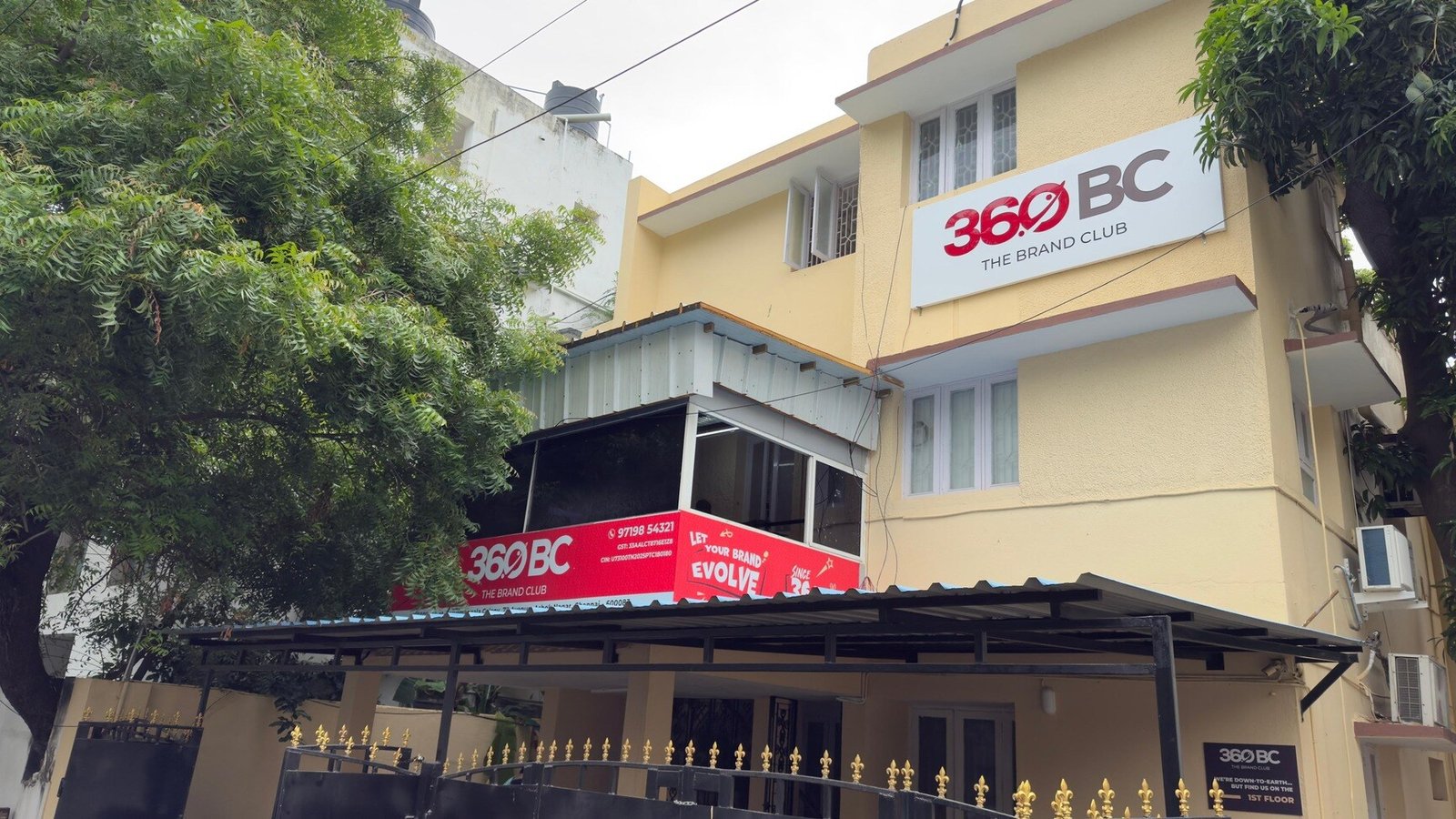
As a full-stack branding and marketing agency in Chennai, 360 BC Brand Club helps brands navigate both digital and traditional channels. The focus is always on what works best for the brand, not simply what is trending or easiest to buy.
Frequently asked questions
Is digital marketing better than traditional marketing?
Not always. They serve different purposes and are strongest when used together.
Are hoardings still effective?
Yes, especially for awareness in high-traffic locations.
Can startups afford traditional marketing?
Selective traditional campaigns paired with digital usually work best.
What is integrated marketing?
A strategy that combines digital, traditional, and experiential channels into one aligned system.
Conclusion
The debate is not about choosing sides. It is about choosing balance. In a city like Chennai, where audiences engage both online and offline, the future belongs to brands that understand how credibility, performance, and experience work together.